Sensor detection and wiring
Development sensor input connected to the embedded controller.

FLIGHT COMPUTER / DEVELOPMENT PLATFORM
An evolving embedded and ROS 2 based system for sensing, telemetry, and aircraft state development.
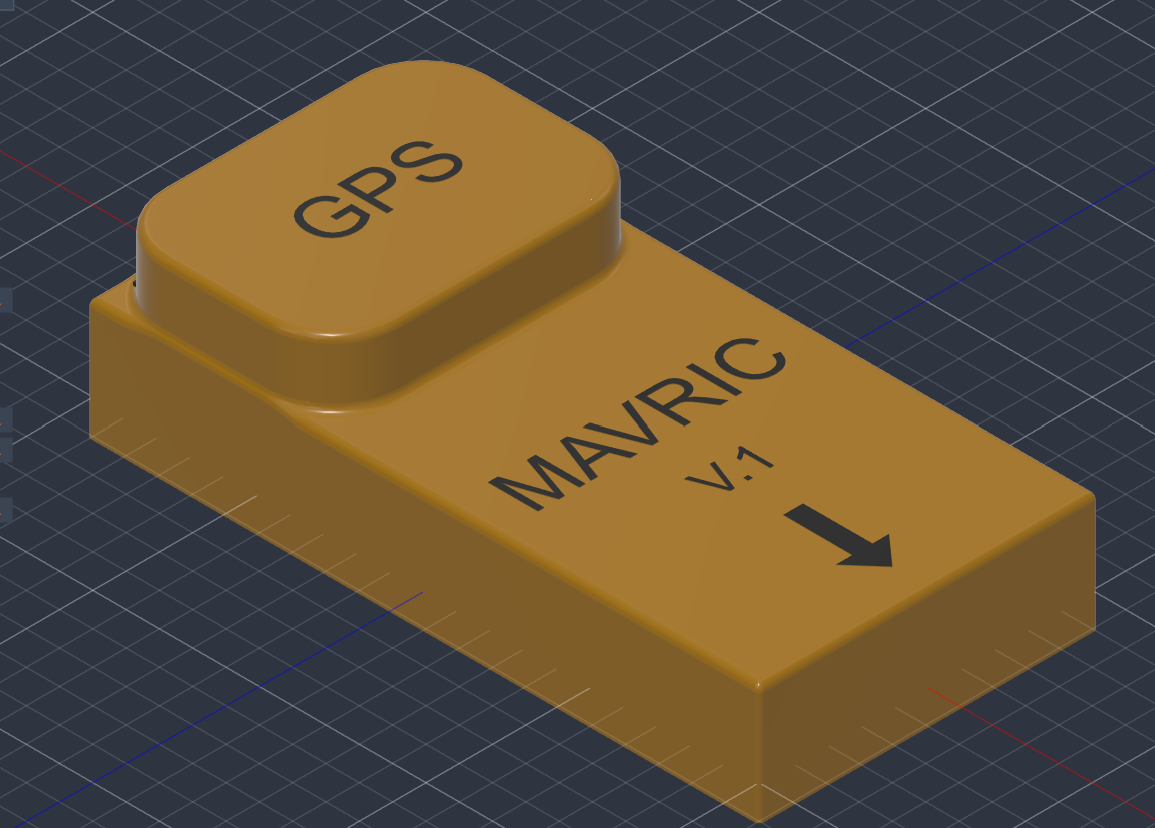
THE COMPLETE ASSEMBLY / SOURCE CAD
GPS housing, enclosure markings, and orientation shown in Tryan's supplied CAD view.
SYSTEM / 01
The controller gathers sensor observations and publishes structured serial data. A companion computer receives the stream and publishes ROS 2 topics for inspection. This is a bench-stage foundation; aircraft state estimation and closed-loop flight control still require development and testing.
Full assembly CAD · development model
ARCHITECTURE / 02
Monitoring and logging are development uses. Navigation, autonomy, and flight-level fault responses are future work.
HARDWARE + SOFTWARE / 03
Current sensor acquisition and serial telemetry development.
ROS 2 ingestion, topic publishing, and diagnostic inspection.
MPU6050, BMP280, QMC5883L, and Foxeer M10Q-250 GPS used in development.
Sensor bring-up and calibration, structured serial data, and ROS 2 topic publishing at bench stage. Indoor GPS observations are not evidence of an outdoor position fix or aircraft navigation performance.
DEVELOPMENT / 04
Development sensor input connected to the embedded controller.
Calibration workflow and structured serial data observed.
Serial stream to the Raspberry Pi development setup.
Sensor topics published for inspection on the companion computer.
Repeatability and fault responses need deeper testing.
Real-time flight control, navigation, and in-air behaviour require validation.
WHY IT MATTERS / 05
Direct access to sensor data and control of the integration pathway make it easier to inspect errors, compare observations, and adapt the platform for future aircraft concepts. Bench results are a starting point for integration, not proof of flight readiness.
NEXT STEP / TRYAN
Explore SHENYA and the larger VTOL development brief, with status and targets kept distinct.
Explore UAV design